
Research theme
Political Ideologies
Whether the people can speak with one voice, and the question of a society beyond capitalism. Post-truth, populism, the return of the sophist and the communist idea after communism.
The decade after the 2008 financial crisis came to be defined by two words: post-truth, word of the year in 2016, and populism, word of the year in 2017. Both carry the idea that truth no longer matters in politics, and that this state of affairs has opened the way for all manner of demagogues. For a rhetorician, that explanation is problematic. Aristotle already knew that many political questions have no given truth. But merely defending the sophists’ relativism against a rigid notion of truth does not untie the Gordian knot.
I therefore return to the figures that haunt the debate: the people, the sophist and the communist idea. The question is not who is historically right about them, but why we keep returning to them today.
Three strands
The people and critique
The people as a political figure and critique as a task for thought are commonly set against each other. The people becomes the unthought of critical thought: thoughtless, without reason, something to be saved from itself. Already in Kant we see how the concept of the people gives rise to both attraction and repulsion. For while revolution is a sublime spectacle for the onlooker, it is an actual people that rebels against its constitution and tears apart the very form that makes it a people.
The sophist and post-truth
Rhetoric likes to tell its own birth as a struggle between democratic sophists and aristocratic philosophers. Today the positions are inverted: it is no longer the philosopher’s claim to truth that threatens democracy, but the new sophists’ indifference to truth. What interests me is what each return to the sophist reveals about the desire that drives it.
Populism and the communist idea
If democracy is understood as antagonistic, populism can no longer be dismissed as purely anti-democratic. Through Slavoj Žižek and Ernesto Laclau, irony and catachresis, I examine why populism can work in practice but never in theory, and why the communist idea returns precisely where it failed as reality.
Publications
2026. Hegemoni (in Swedish). Entry in Nordisk retorikkleksikon.
2025. Tragedy, Then Farce: Slavoj Žižek’s Theory of Populism. Crisis & Critique.
2023. Populism and the People in Contemporary Critical Thought. Edited volume, Bloomsbury, with David Payne and Gustav Strandberg.
2023. Ironier och katakreser: Populismens logik eller kommunismens idé? (in Swedish). Rhetorica Scandinavica.
2023. From Communist Ideology to the Idea of Communism. Filozofski vestnik.
2023. The Exemplary Rhetor: On Anti-Philosophy and Sophistics in Alain Badiou. Distinctio.
2020. Slavoj Žižek and Dialectical Sophistics. Philosophy & Rhetoric.
Writing
Preliminary Reflections on ’Social Cohesion’. Essay in three parts.
Sverigedemokraterna och demokratins antidemokratiska kärna (in Swedish).
Hotet mot demokratin: tre böcker om demokratins tillstånd (in Swedish).
Tre tänkare om coronakommunismen (in Swedish).
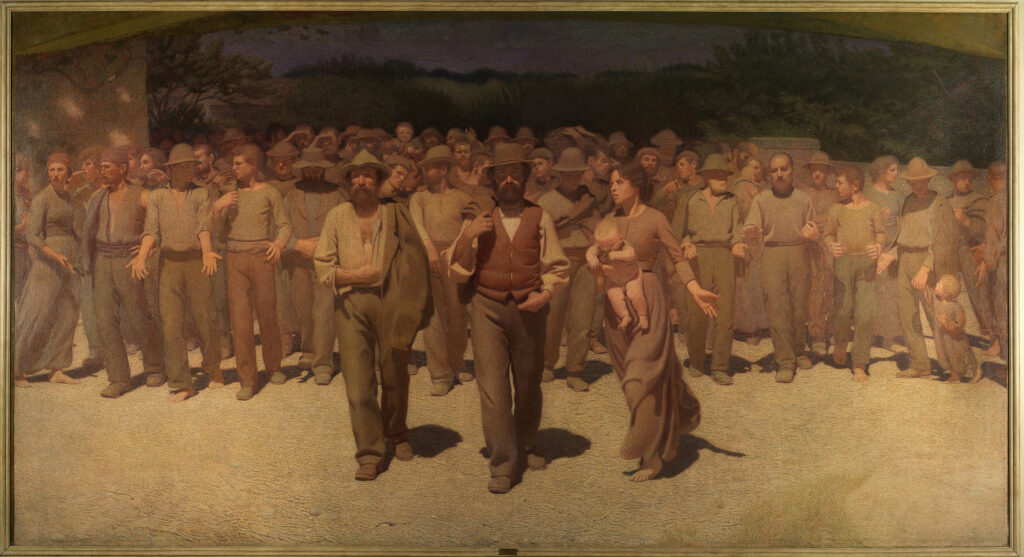
Lecture: The rhetoric of populism. On the people, the elite, and why populism works in practice but never in theory.