
Example παράδειγμα
The example (Greek paradeigma) is an argument based on a single case, real or invented. For Aristotle it is, alongside the enthymeme, one of the two forms of logos that belong to rhetoric: rhetoric’s counterpart to induction.
From the particular to the general
The example moves from a case to a conclusion: “Country X has done this, so we should do it too.” Formally it is a weak inference, since a single case can never prove a rule. But rhetoric is not about proof in the logical sense, but about what can persuade an audience in a particular situation, and few things persuade as effectively as a well-chosen example.
In everyday life the example is often personal: “My friend quit social media and feels much better.” It says nothing about everyone who quits social media, but it makes the matter concrete, and it raises the question of whether the same would not be true for me.
Historical and invented examples
Aristotle divides examples into two kinds. One is the historical example, what has actually happened. His own example is the Persian kings: Darius took Egypt before he marched on Greece, and so did Xerxes. Therefore the present king must be prevented from taking Egypt.
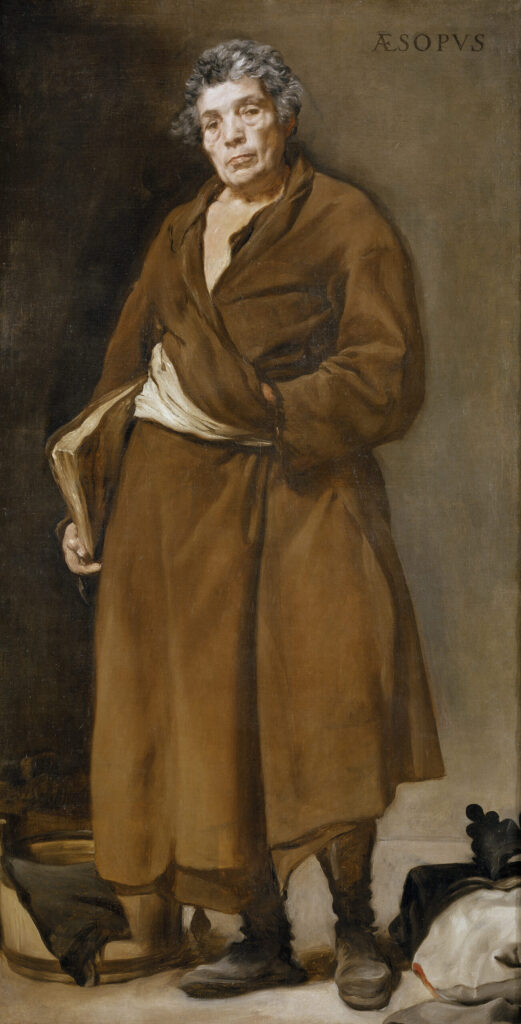
The other kind is the invented example, which can be a comparison or a fable. The comparison is Socrates’ argument against choosing rulers by lot: we would never let the lot decide which of the sailors should steer the ship. The fable is stories like Aesop’s, in which animals and things are given speech. Aristotle points out that fables are easier to invent than historical parallels, but that historical ones often persuade more, since the future usually resembles the past.
The example and the story
The example lies close to the story. Someone who tells Aesop’s fable of the two pots, one of clay and one of metal, floating down the river together, does not need to say what it means. The story makes the argument, and the audience draws the conclusion itself. That is also why examples and fables are so hard to answer: the audience has already interpreted them. Read more about narratio and storytelling.
The risks of the example
Examples are easy to cherry-pick. Someone who wants to show that a policy works can almost always find a country where it has worked, and someone who wants to show the opposite can find another. Anyone examining an argument should therefore ask: why this example in particular, and how representative is it? Are the differences between the cases more important than the similarities?
A well-chosen example can carry a whole speech. How to find it is something we practise in my courses.
Questions
What is argument by example?
Argument by example is when a speaker supports their thesis with a real or invented case. It is rhetoric’s counterpart to induction.
What is the difference between an example and an enthymeme?
The example moves from a particular case to a conclusion, the enthymeme from a general rule to a case. According to Aristotle, both persuade, but enthymemes win the most applause.
What does paradeigma mean?
Paradeigma is Greek for “model” or “pattern”. The word lives on in the English “paradigm”.
Sources
Aristotle, Rhetoric 1.2 (1356b) and 2.20 (1393a–1394a)
Aesop, “The Two Pots”