
Research theme
Economy
The utopia of an economy beyond politics. How the independent central bank explains itself, and what happens when it is asked to take responsibility for the climate.
Central banks are among the oldest institutions of the modern state, and for most of their history they have been known for saying as little as possible, as cryptically as possible. Since the 1990s they have done the opposite. When central banks became independent, communication replaced democratic influence: trust was to be created through public speech. Central bankers thereby became political figures, largely without the public noticing.
Research on central bank communication today is predominantly quantitative: language is stripped of its context so that it can be measured. I study instead what central banks actually say, and how they act politically through language.
Four strands
Sustainability in the Riksbank Act
Under the 2023 Riksbank Act, the Riksbank must take sustainability into account across all its operations, which has been criticised as a threat to the bank’s independence. In my Formas project I examine how the Riksbank frames sustainability in monetary policy, in its investments and in its work on financial stability, how this image has changed over time, and how it relates to the legislators’ intentions.
Trust as a remedy
When Stefan Ingves summarised his cure for the financial crisis in 2009, it had three ingredients: “confidence, confidence, and trust”. Trust has become the central bank’s most important currency, and since it cannot be given as an injection, only one way of spreading it remains: communication. I trace how trust became the Riksbank’s political question from the 1990s onwards.
Odysseus and the oracle at Delphi
Banks were long built as Greek temples, and central banks spoke like the oracle at Delphi, which, according to Heraclitus, neither speaks nor conceals but gives signs. Today economists distinguish between “Delphic” and “Odyssean” forward guidance, between the forecast and the promise. I take these Greek figures seriously, to understand the silence and equivocation in central bank speech.
The value of language
Modern linguistics, and rhetoric with it, has long understood language in economic terms. Through Ernesto Laclau’s empty signifier and Marx’s general equivalent, I show the risks of modelling rhetoric on the value-form: rhetoricity, like capital, may come to demand endless circulation simply to produce more of the same.
Publications and writing
2026. How to Do Things with Interest Rates. On this year’s economics prize and the rhetoric of economics.
2024. Retorikens värde: Kan retoriken tänka det nya? (in Swedish). Rhetorica Scandinavica.
2023. Under pandemin blev alla keynesianer – och det är ingenting att glädjas över (in Swedish).
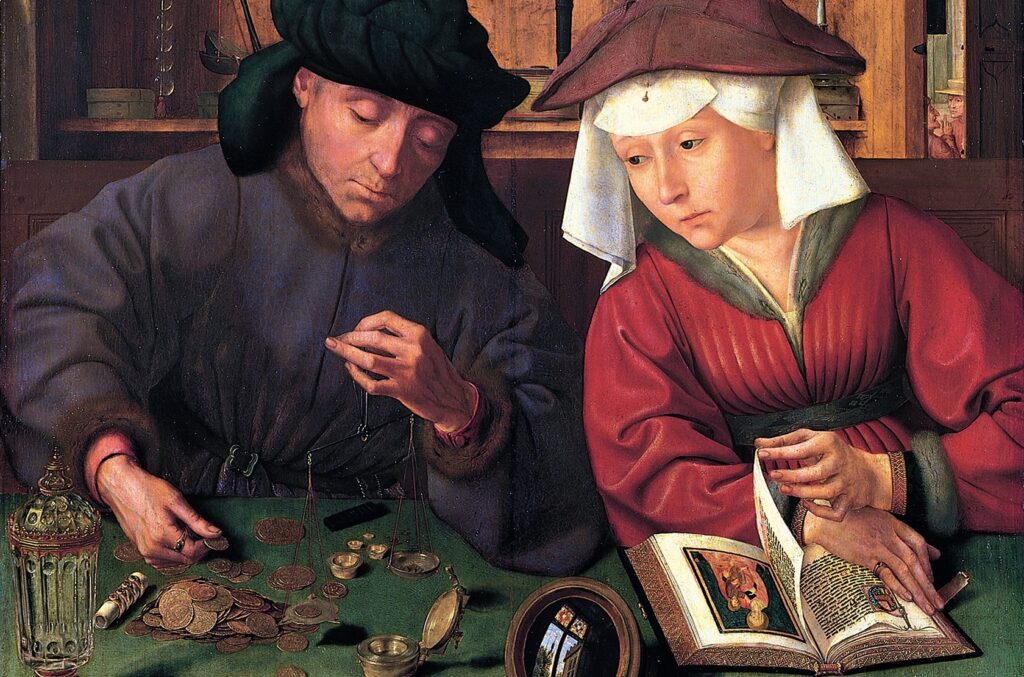
Lecture: How central banks speak. On trust, forecasts and promises, and what happens when an independent authority has to communicate sustainability.